Section index · industrial blowers · 29/06/2026
Industrial Blowers & Process Air
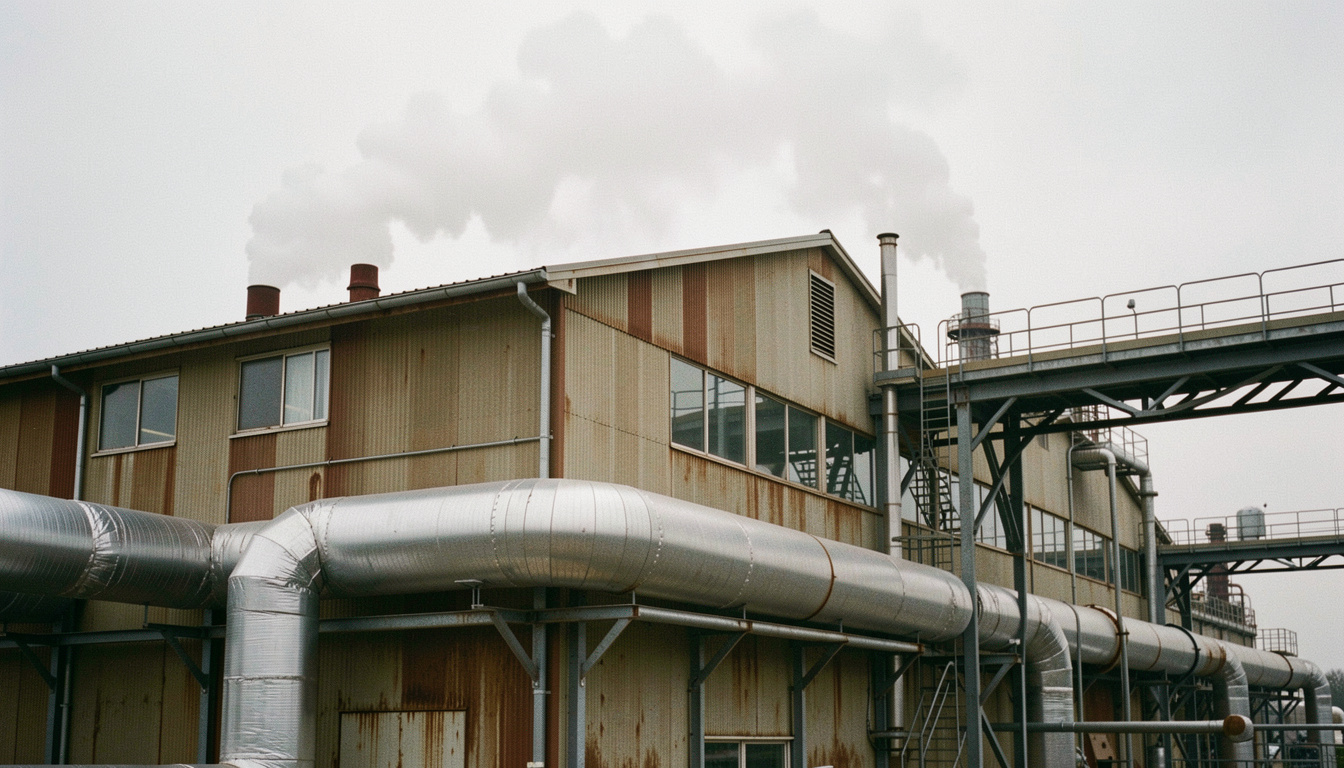
Process air in a heavy plant is three problems, not one. Cooling air is volume without pressure. Dedusting is pressure with abrasion. Combustion air is pressure with a control loop.
This section covers the machines used in steel and power plants, from Stelmor cooling blowers on a wire rod line to the dedusting fans that hold a capture hood at negative pressure.
Process air in a steel or power plant is not one problem but three, and they are solved by three different machines. Cooling air is a high-volume, low-pressure duty. Dedusting is a moderate-volume, high-resistance duty carried out in an abrasive gas stream. Combustion air is a moderate-volume, high-pressure duty with a control loop attached to it. A fan that is excellent at one of the three is usually poor at the other two.
The three detail pages under this hub follow that division. What they have in common is the sizing discipline: airflow at the actual gas condition, static pressure through the whole system rather than across the fan, and a duty point that sits where the machine is efficient rather than where the curve happens to reach.
Cooling air: volume without pressure
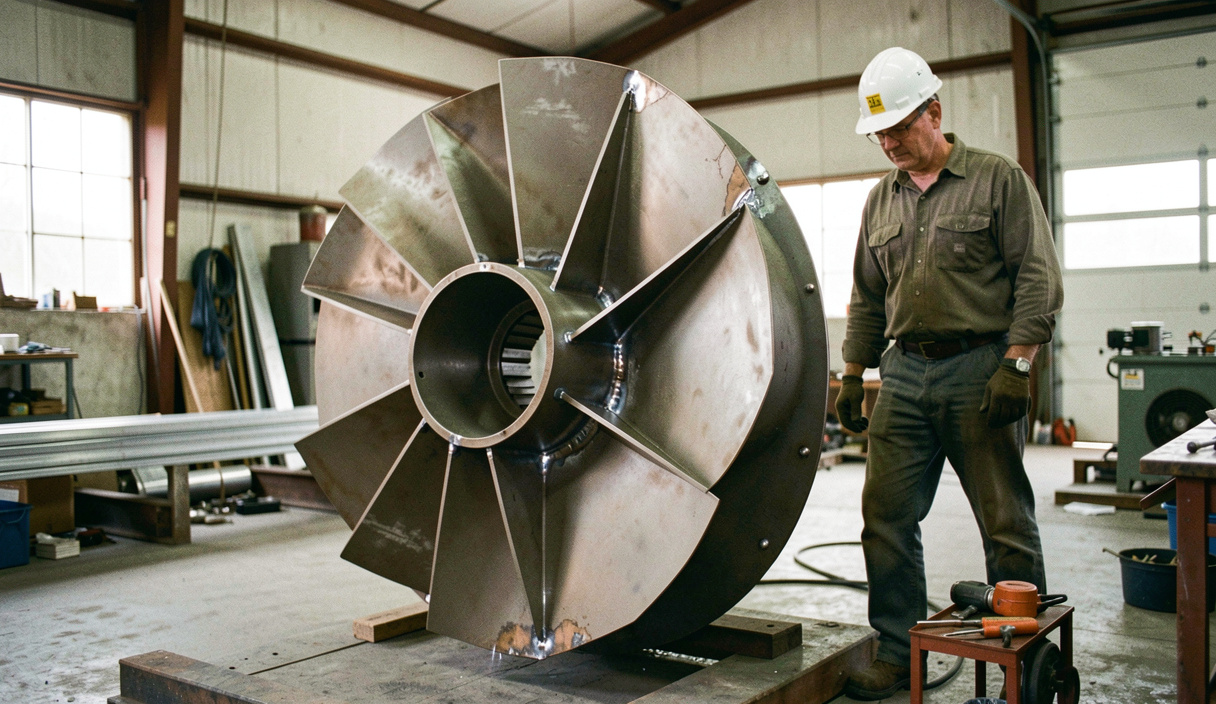
The cooling duties in a rolling mill move very large volumes at a static pressure of only one or two kilopascals. On a wire rod line the air is pushed upward through a moving conveyor of hot steel rings, and the thing being bought is not airflow but airflow uniformity across the width of the conveyor. A fan that delivers the right total volume with a poor distribution produces rod whose mechanical properties vary along its own length, which is a metallurgical failure rather than a mechanical one. That duty is the subject of the page on Stelmor blowers for wire rod cooling lines.
Dedusting: pressure, wear and negative gauge
Dedusting is the opposite problem. The volumes are smaller, but the system resistance is high, typically 3 to 6 kilopascals once a fabric filter is in the circuit, and the gas carries abrasive dust that removes metal from the blade tips. Fans in this duty are specified on wear allowance, blade hardfacing and cleanability as much as on efficiency, and they are almost always installed on the clean side of the filter where the plant layout allows it.
They also have to hold a negative pressure at the capture hood, because a hood that does not hold its face velocity does not collect dust, it merely makes noise. The sizing logic for sintering and blast furnace applications is worked through in the dedusting blower page.
| Duty | Typical volume | Typical static pressure | Governing constraint |
|---|---|---|---|
| Wire rod cooling | 1,500 to 4,000 m3/min | 1.0 to 2.5 kPa | Uniformity across the conveyor |
| Dedusting, bag filter | 500 to 3,000 m3/min | 3 to 6 kPa | Abrasion and filter resistance |
| Sinter main exhaust | 5,000 to 15,000 m3/min | minus 15 to minus 18 kPa | Suction through the sinter bed |
| Combustion air, stove | 200 to 1,500 m3/min | 8 to 25 kPa | Air to fuel ratio control |
| Circular cooler | 2,000 to 6,000 m3/min | 3 to 8 kPa | Heat load and dust |
Combustion air: the duty with a control loop
A combustion air blower is sized against a fuel, not against a room. Burning natural gas takes roughly 9.5 cubic metres of air for every cubic metre of gas at stoichiometric conditions; burning blast furnace gas, which is far weaker, takes well under one. The blower has to supply that ratio across the whole firing range, with an excess air margin, and it has to keep supplying it when the burner turns down. What happens when it cannot is the subject of the combustion blower page, and it is rarely obvious: incomplete combustion shows as carbon monoxide and soot long before anyone notices a shortage of air.
The pressure figure that matters is the total resistance of the circuit at the design flow: hood, ductwork, bends, filter or bed, silencer and discharge stack. A fan selected on the pressure drop across the fan alone will sit at the wrong point on its curve from the first day, and no amount of damper adjustment recovers the efficiency lost there.
Control: damper, vane or drive
Three ways of regulating a fan are in common use, and they differ enormously in what they cost to run. An outlet damper throttles the flow and wastes the pressure difference as heat, which is simple and cheap and expensive forever. An inlet guide vane pre-swirls the air and shifts the fan curve itself, which recovers part of that loss. A variable frequency drive changes the speed, and because fan power follows roughly the cube of speed, a 20 per cent reduction in flow can cut absorbed power by close to half.
On a machine that runs 8,000 hours a year, the difference between these three is usually larger than the difference between two fan makes. It is the same arithmetic that dominates the retrofit profile described in the sintering machine cooling blower case study.
What the three pages cover
Each detail page in this section follows the same shape as the engine platform pages in the generator set section: what the machine is for, how it is sized, what wears, and what the recurring field problems are. Where a plant has both generating sets and process air machines, and most heavy plants do, the two sections are meant to be read together, because the electrical load of a fan house is frequently the largest single item in a plant's standby sizing exercise.
Read next
Start with the cooling duty if the plant is a rolling mill: Stelmor blowers for wire rod cooling lines explains why uniformity beats volume.
For the abrasive, high-resistance duties, the dedusting blower page works through sizing for sintering and blast furnace plants.
For a worked example of a retrofit brief, including noise limits and duty cycle, read the sintering machine loop cooling blower profile in the international case studies.