Section index · generator sets · 02/06/2026
Diesel Generator Sets
A generator set is bought on four figures: output in kVA, the duty class that output is declared under, the ambient it was corrected for, and the power factor assumed. Everything else follows.
This section covers the market from 8 kVA single-cylinder units to 3,000 kVA V20 machines, with a platform page for each of the main engine families and a companion method for sizing a set against a real load list.
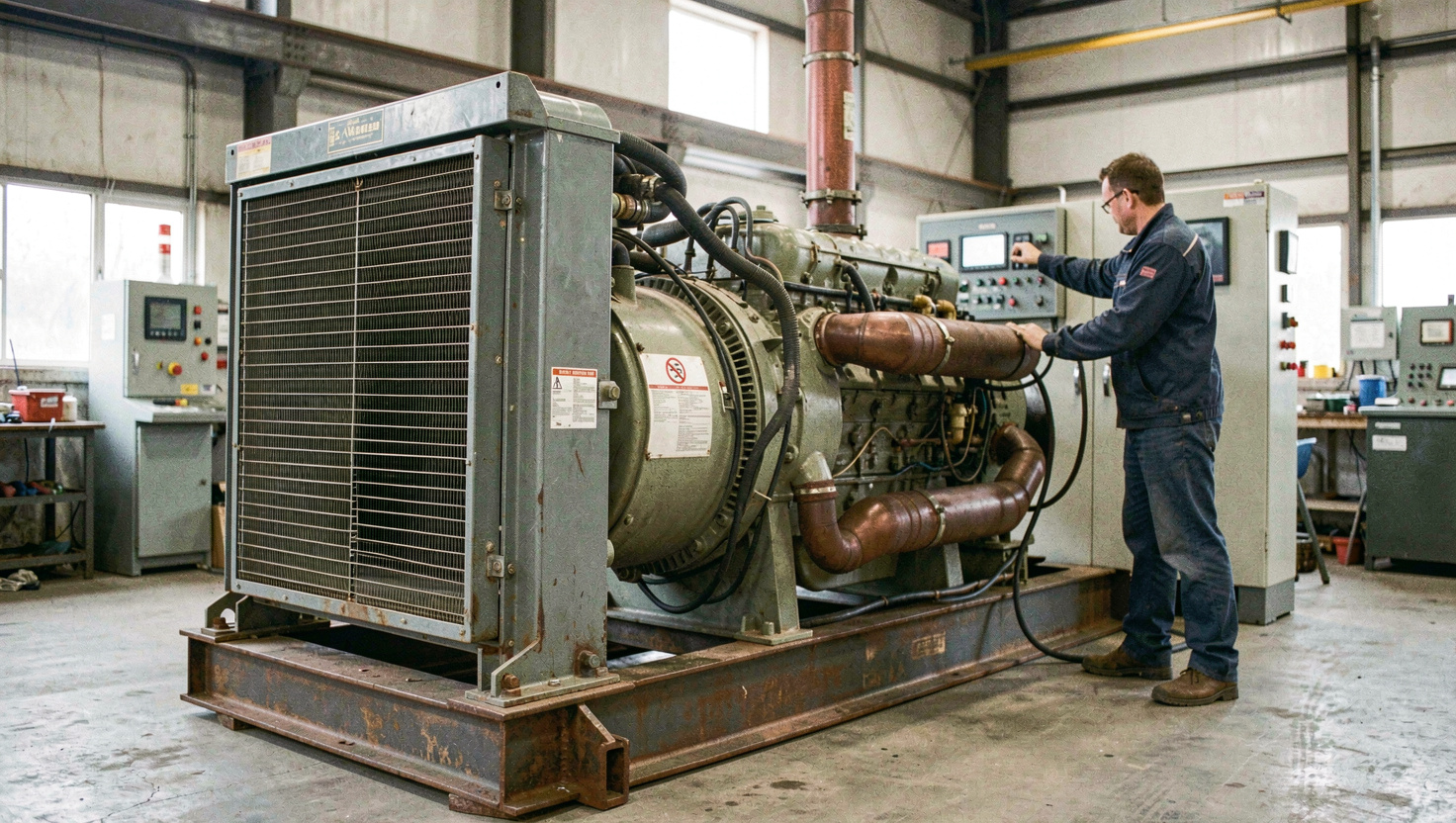
A diesel generator set is three machines bolted to one skid: an engine, an alternator and a control system, sized and rated together. The market talks about brands, but the specification talks about four figures, the output in kVA, the duty class the output is declared under, the ambient it was corrected for, and the power factor assumed. This section works through those figures first, then through the engine platforms that deliver them.
The output range in general industrial use runs from roughly 8 kVA on a single-cylinder air-cooled unit to about 3,000 kVA on a V16 or V20 block. Above that, plants normally parallel several sets rather than buy one very large machine, because two 1,600 kVA sets can be maintained one at a time while a single 3,200 kVA set cannot.
Prime, standby and continuous, the three ways to sell one machine
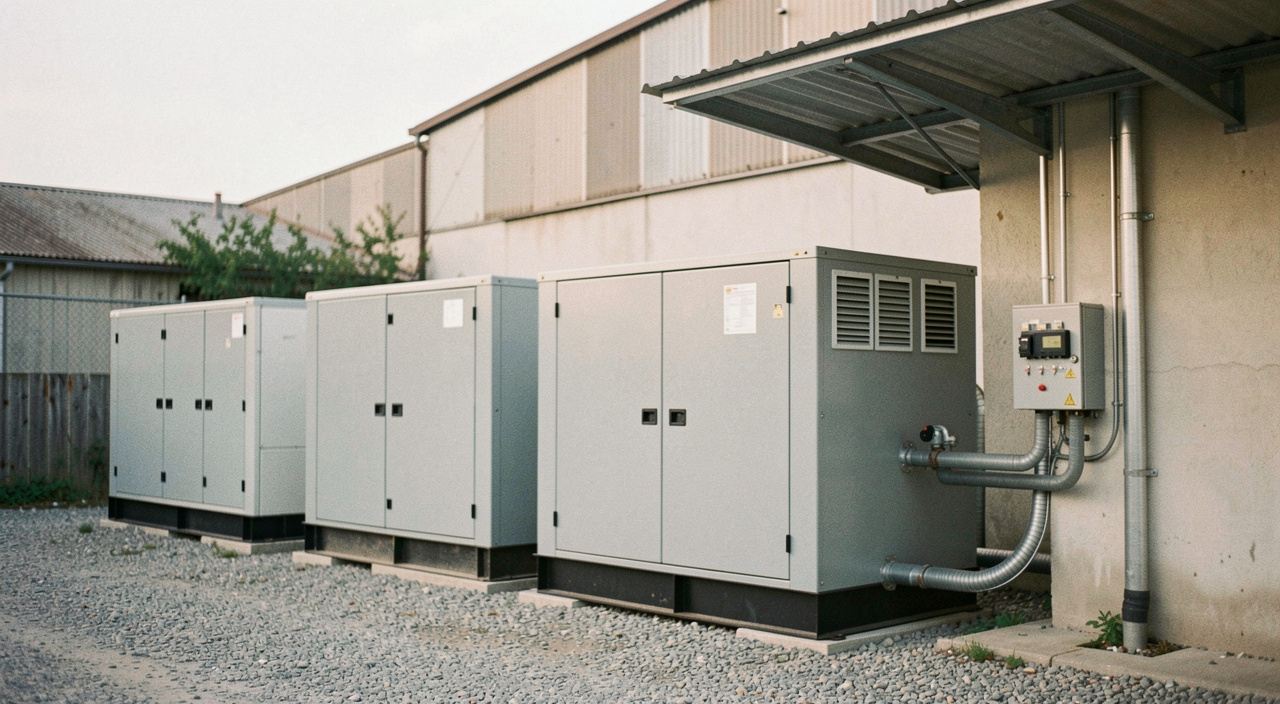
The same engine and alternator can be sold under three different kilowatt figures, and the difference is not marketing, it is the annual running profile allowed. ISO 8528-1 defines emergency standby power for use during a utility outage, with a variable load and a limited number of hours per year, typically quoted around 200 hours. Prime power allows unlimited hours at a variable load, usually with an average load factor of about 70 per cent of the prime rating over any 24 hour period. Continuous power allows unlimited hours at a constant load, which is what a base-load or grid-parallel site needs.
The practical gap between the standby and prime figures on the same machine is often 9 to 10 per cent. A set advertised at 550 kVA standby may be a 500 kVA prime machine. Comparing two quotations without checking which rating each one used is the single most common source of a bad purchase, and it is why the method for turning a load list into a kVA figure insists on writing the duty class next to the number.
What the engine brand actually decides
Engine choice decides four things: the power band available, the parts network, the emission certification the set can carry, and the published service intervals that dominate running cost. It decides very little about the alternator, which is usually a brand-independent brushless machine with a rotating rectifier and an automatic voltage regulator, and nothing at all about the enclosure.
The imported platforms cover the range in overlapping bands. Cummins engines used in generating sets run from the 4-cylinder B series near 20 kVA up to the QSK60 above 1,800 kVA. Perkins platforms start smaller, at the 400 series under 15 kVA, and reach about 2,500 kVA on the 4016 block. Volvo Penta TAD and TWD engines stop lower, near 700 kVA, because the genset range is built on inline six-cylinder blocks rather than V configurations.
The Chinese platforms occupy the middle of the market with a different cost structure and a different parts logic. The Weichai WP series, the Yuchai YC series and the Shangchai SC and C series between them cover roughly 30 to 1,000 kVA, which is where most industrial and commercial standby demand sits.
| Band | Typical use | Engine size | Cylinders |
|---|---|---|---|
| 8 to 40 kVA | Shops, small offices, telecom huts | 1.5 to 3.0 L | 3 or 4 in line |
| 50 to 150 kVA | Buildings, small plants, site power | 3.9 to 7.0 L | 4 or 6 in line |
| 200 to 500 kVA | Hospitals, data rooms, process plant | 8.9 to 19 L | 6 in line |
| 550 to 1,200 kVA | Large buildings, heavy industry | 19 to 38 L | 6 in line or V12 |
| 1,250 to 3,000 kVA | Base load, paralleled standby | 38 to 78 L | V12 to V20 |
Where the rating is lost: ambient, altitude and fuel
Every rating on a data sheet belongs to a reference condition, usually 25 degrees Celsius air inlet temperature at sea level under ISO 3046. A set installed in a plant room that reaches 45 degrees, or on a site 1,800 metres above sea level, does not deliver the plate figure. The usual planning rule is a loss of about 1 per cent of output per 100 metres above 1,000 metres, and about 2 per cent per 5 degrees above 40 degrees, with the engine manufacturer's own correction table taking precedence.
A quoted output without its reference condition is not a specification. Ask for the ambient temperature, the altitude, the power factor and the duty class that produced it. Two sets that look identical on a brochure can differ by 15 per cent once corrected for a hot plant room at altitude.
The parts that decide the daily life of the set
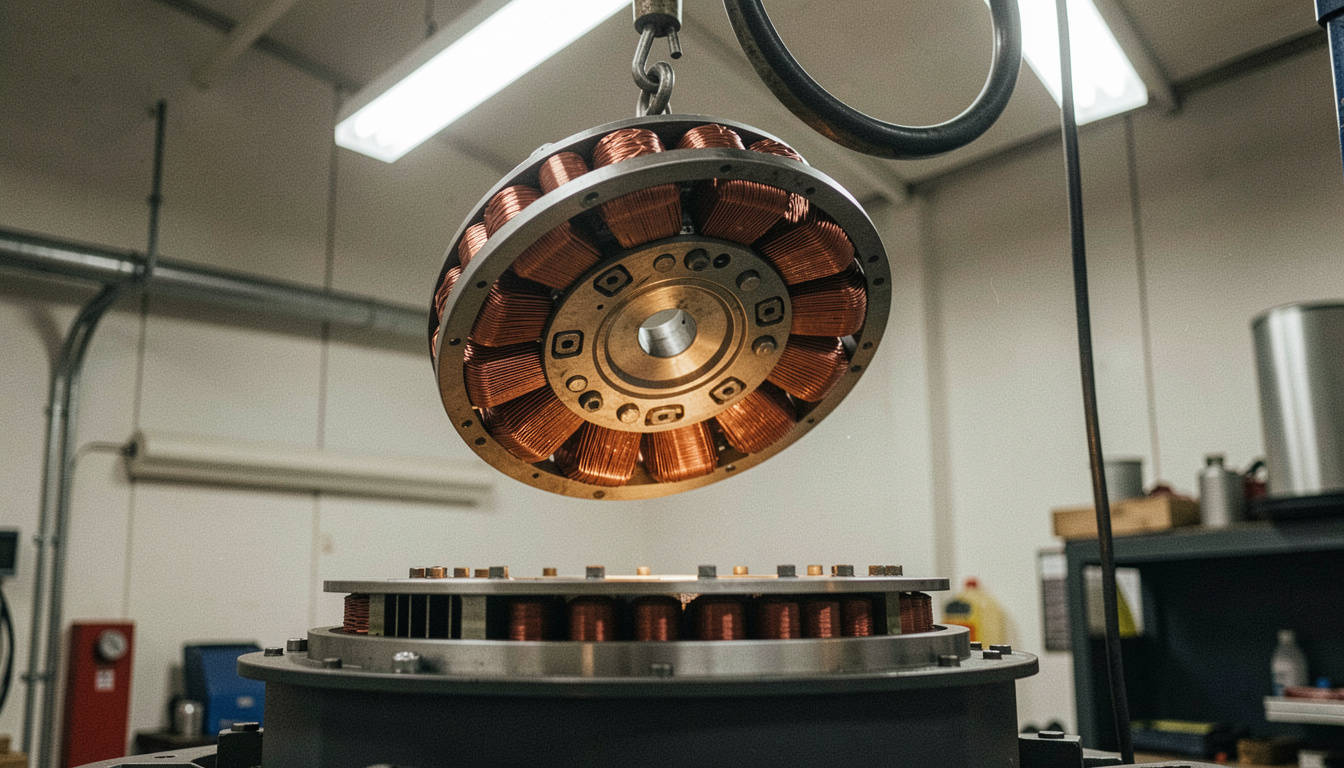
Once the rating is settled, the arguments move to the parts nobody photographs. The alternator winding pitch decides how the set behaves with non-linear loads. The controller decides whether the machine can be paralleled or only run alone. The base fuel tank decides autonomy, usually 8 hours at full load for a building set, and it also decides how much stagnant diesel will be sitting there in year three, which is the subject of the guide to fuel tank corrosion, seal failure and contamination.
The maintenance schedule follows the engine family more than the badge on the canopy. Oil and filter intervals, valve clearance checks and coolant renewal are published per engine series, and the whole of the maintenance and operation section is organised that way. New machines also carry a running-in requirement before full-load operation, which is easy to skip and expensive to skip.
How this section is organised
Six engine platform pages sit under this hub, each following the same plan so they can be compared line by line: engine families used in generating sets, the electrical output they cover, cooling and turbocharging, published service intervals, and the points that recur in service. Alongside them, the explainer on OEM, assembler and distributor roles is worth reading before any purchase conversation, because the answer to who actually built a set is rarely the badge on the door.
Read next
Start with the numbers: sizing a generator set from a load list shows how a running kilowatt total and a motor starting sequence become a kVA figure with a margin.
For a first comparison of the imported platforms, the Cummins model range page is the widest in output, and the Volvo Penta page covers the standby duty case most directly.
If the set is already installed, the maintenance guides carry the service intervals, and the case studies section collects installation profiles by equipment type.