Genset Digest / Maintenance & Operation Guides / Fire safety
Genset Room Fire Safety
A generator room holds stored diesel, exhaust surfaces above 400 degrees, a charging battery and a door that stays locked between monthly runs. This guide covers what to provide, where to put it, and what the first thirty seconds should look like.
A generator room contains everything a fire needs: a stored quantity of diesel, hot surfaces above 400 degrees Celsius on the exhaust side, a battery giving off hydrogen while it charges, and a room that is often locked and unvisited between monthly runs. The risk is not exotic. It is the ordinary combination of fuel, heat and neglect.
Fire precautions in such a room fall into three parts: what is provided, where it is placed, and what happens in the first thirty seconds. All three are worth settling before an incident rather than during one.
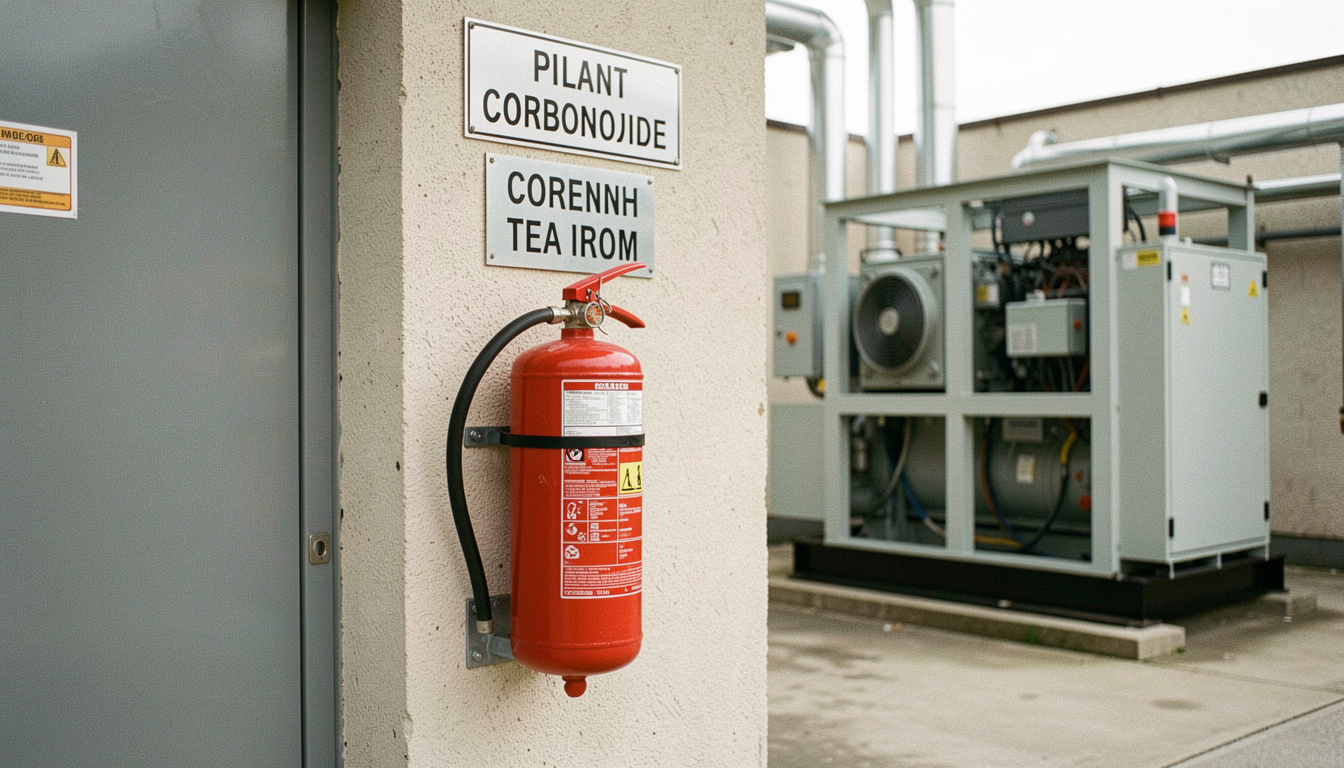
Which extinguishers, and why
Two agents cover almost every fire that starts in a generator room. Carbon dioxide is the first choice for electrical equipment: it is non-conductive, it leaves no residue on a switchboard or an alternator, and it can be used on live equipment. Dry powder is effective on a running fuel fire and on mixed risks, but it contaminates everything in the room, which on a control panel means a cleaning bill and a functional check afterwards.
Foam is appropriate for a contained pool of spilled fuel, on a bund or a drip tray. Water is appropriate for nothing in this room, and the reason is worth stating plainly: it conducts, and it spreads burning fuel rather than extinguishing it.
| Risk | Suitable agent | Avoid |
|---|---|---|
| Alternator, panel, cabling | Carbon dioxide | Water, foam |
| Running fuel leak on a hot surface | Dry powder | Water |
| Pooled fuel in a bund or tray | Foam or dry powder | Water |
| Battery area | Carbon dioxide | Water |
| Ordinary combustibles stored nearby | Remove them | Nothing else works |
Layout: where things are placed
Extinguishers belong on the escape route, mounted by the door at a height that a person can lift them from, with clear signage above. A common rule of thumb is that nobody should have to travel more than about 15 metres to reach one, and in a generator room that usually means at least two, one inside the door and one at the second exit if there is one.
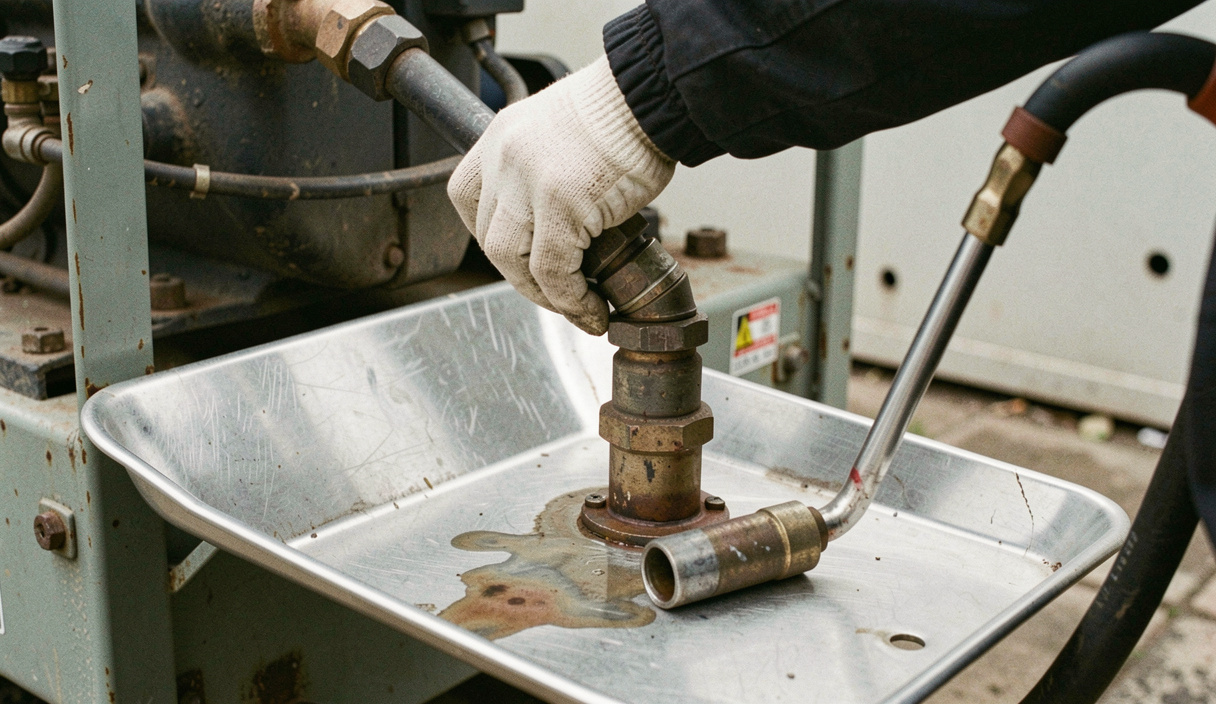
Three other placements matter as much as the extinguishers. An emergency stop outside the room, so the engine and its fuel supply can be shut down without entering. A fuel isolation valve, likewise reachable from outside, so a leaking line can be closed. And a bund or drip tray under the tank and under the fuel connections, so a leak becomes a contained pool rather than a spreading film.
Operate the external emergency stop, which shuts down the engine and closes the fuel solenoid. Isolate the electrical supply. Raise the alarm and evacuate. Attack the fire only if it is small, only from the doorway with the escape route behind you, and only with an appropriate agent. A generator room fire that is not out within the first extinguisher is a job for the fire service.
The conditions that start these fires
Almost all of them are maintenance conditions rather than design faults. A weeping fuel return line dripping onto an exhaust manifold that runs at several hundred degrees. An oily rag left on the engine after a service. Cardboard, paint tins or spare filters stored in the room because it is dry and lockable. A battery charging in an unventilated corner, producing hydrogen with no path out. A cable termination that was never re-torqued and is now running hot enough to char its insulation.
The fuel side deserves particular attention, because a tank that has aged badly is also a tank whose seals and fittings have aged badly. The order in which to inspect one is set out in the fuel tank problems guide, and the same inspection catches the seep that would otherwise find the manifold.
Detection and fixed systems
Where the generator room serves a critical installation, detection is usually extended beyond the building's general system: heat detection rather than smoke detection, because a running diesel produces enough airborne particulate to nuisance-trip a smoke head, and interlocks that shut the set down and close the ventilation dampers on a confirmed alarm.
Fixed suppression, where fitted, brings its own requirement: the room has to be reasonably sealed for a gas system to hold its concentration, and the ventilation dampers that a running engine needs open are exactly what a gas system needs closed. Resolving that conflict is a design question, and it belongs in the installation constraint list described in the case studies section rather than in a retrofit.
Records
Extinguisher servicing dates, detection test records, emergency stop function tests and the fuel system inspection all belong in the machine's file alongside the commissioning report and the load test results. What that file should contain is set out in the certification and standards page, and the routine that keeps it current is the ordinary schedule in the maintenance section.
Read next
The most common ignition source in these rooms starts at the tank: the fuel tank problems guide gives the inspection order that catches a seep early.
For the room design constraints, ventilation, damper interlocks and access, see the installation profiles.
For the documents that should sit in a machine file alongside the fire records, read the certification and standards page, and the maintenance index for the rest of the schedule.