Section index · international news · 19/08/2026
International News
A set sold into a region with a reliable grid is insurance. The same set sold where the utility fails weekly is a working power station, bought and maintained on completely different terms.
This section covers the trends visible from that end of the trade, with the project-level detail in the international case studies section.
Export markets for generating sets do not follow the same logic as domestic replacement markets. A set sold into a region with a reliable grid is insurance. The same set sold into a region where the utility fails several times a week is a working power station, and it is bought, specified, financed and maintained on completely different terms.
This section covers the trends visible from that end of the trade, and keeps them separate from the domestic news section because the specification consequences diverge.

Duty class is the export market's defining question
The most consequential difference is duty. A machine bought on a standby rating and then run 1,500 hours a year is being operated outside the class it was sold under, and the arguments that follow are predictable. Where grid reliability is poor, the enquiry has to state the expected annual hours and the expected load factor from the beginning, which usually moves the purchase up one rating class and one frame size.
The platforms most commonly specified for this work are covered in the Yuchai page and its neighbours in the generator set section, all of which are written with prime duty in mind rather than pure standby.
| Trend | Specification consequence |
|---|---|
| Poor grid reliability | Prime rating rather than standby rating |
| Divergent emission frameworks | Engine certification checked per market |
| Container packaging as standard | Tighter ventilation and hot-climate derating |
| Long parts distance | Spares holding written into the order |
| High ambient and altitude | Rating corrected before comparison |
Emission frameworks diverge, and that shapes the product
Regions apply different exhaust emission requirements to stationary generating plant, and the transitional arrangements differ as much as the limits do. The practical effect is that manufacturers maintain parallel product lines: electronically controlled engines with aftertreatment for regulated markets, and mechanically governed versions for markets where no such requirement applies.
For a buyer that means the same model designation can describe two meaningfully different machines, with different fuel cleanliness requirements and different diagnostic methods. Establishing which one is being quoted is a one-line question that avoids a long argument later, and the reasons are set out in the Cummins platform page.
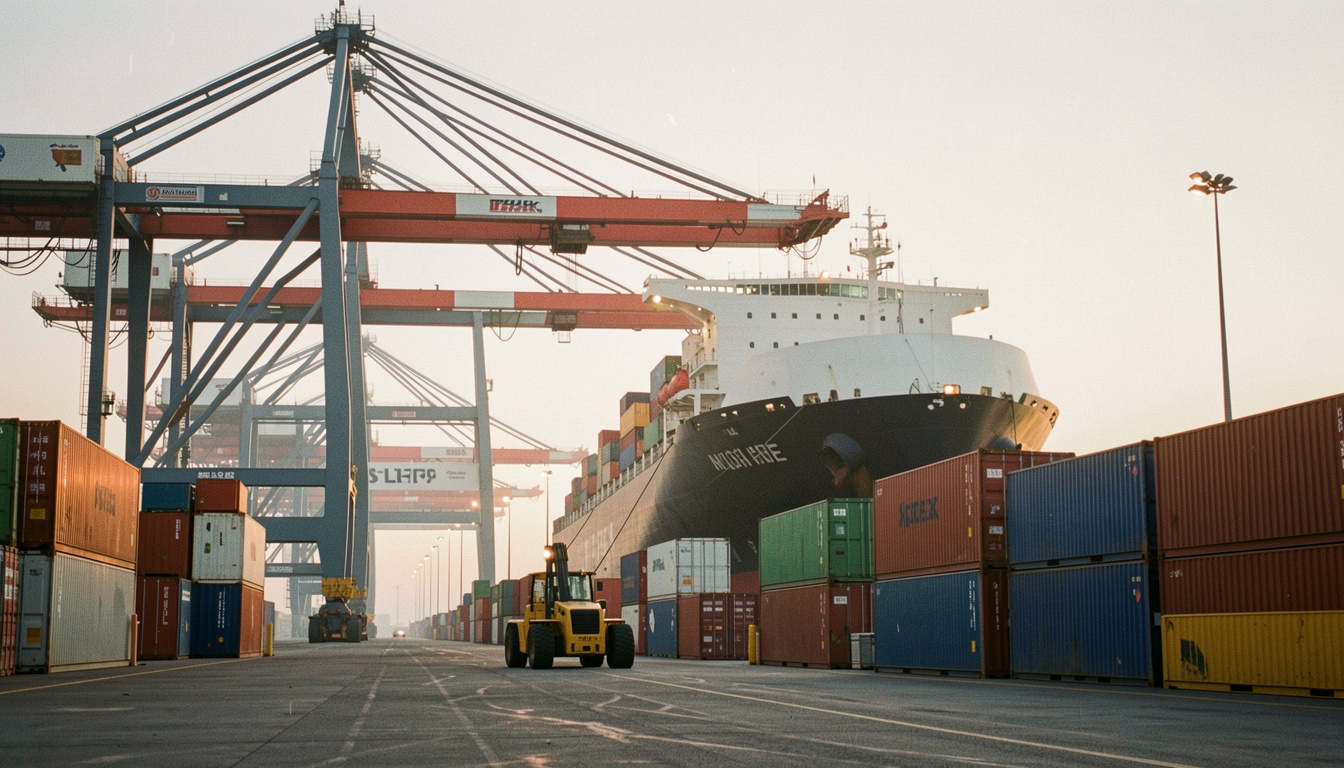
A container-mounted set is weatherproof and needs no building, which is why it dominates export supply. It also has smaller ventilation openings than a plant room and restricted internal service access. In a 45 degree ambient both of those matter, and they belong in the rating correction rather than in the delivery note.
After-sales is becoming part of the product
The second visible shift is commercial rather than technical. Buyers in export markets increasingly ask for the service arrangement to be quoted with the machine: a defined spares package delivered with the set, a response time, and training for the site's own technicians. This is a rational response to distance. A machine that cannot be repaired within a week is not a power source, it is a large object.
The specification consequence is a longer enquiry document and a shorter argument later. A spares list quoted against the actual engine model, with filters, belts, hoses and at least one injector, costs a fraction of one day of lost production. Which items belong on that list depends on the engine family, which is why the platform pages in the generator set section all end on the parts question, and why the commissioning documents in the technical documentation library matter more here than anywhere else.
Process air follows the plant, not the grid
On the industrial air side the export pattern is driven by plant construction and retrofit rather than by grid conditions. Sinter plants, rolling mills and furnace installations buy fans as part of a process package, and the constraints that dominate are dimensional and contractual: what can be shipped, what fits an existing foundation, and what can be installed inside a shutdown window. That brief is worked through in the sintering machine cooling blower profile.
The full set of export-project constraints, climate, logistics, commissioning and support, is collected in the international case studies section, and the datasheet formats these projects run on are described in the English technical datasheet page.
Read next
For project-level detail behind these trends, the international case studies hub collects the constraint lists that reshape an export specification.
For the domestic view of the same specification questions, see the industry news section.
For the documents an export enquiry runs on, the English datasheet page sets out the format and the figures worth extracting.