Genset Digest / Maintenance & Operation Guides / Break-in period
Generator Set Break-In Period
A new engine is not yet the engine it will become. Around 60 hours of staged running lets the piston rings bed into the cylinder honing, and how that period is run decides the oil consumption for the rest of the machine's life.
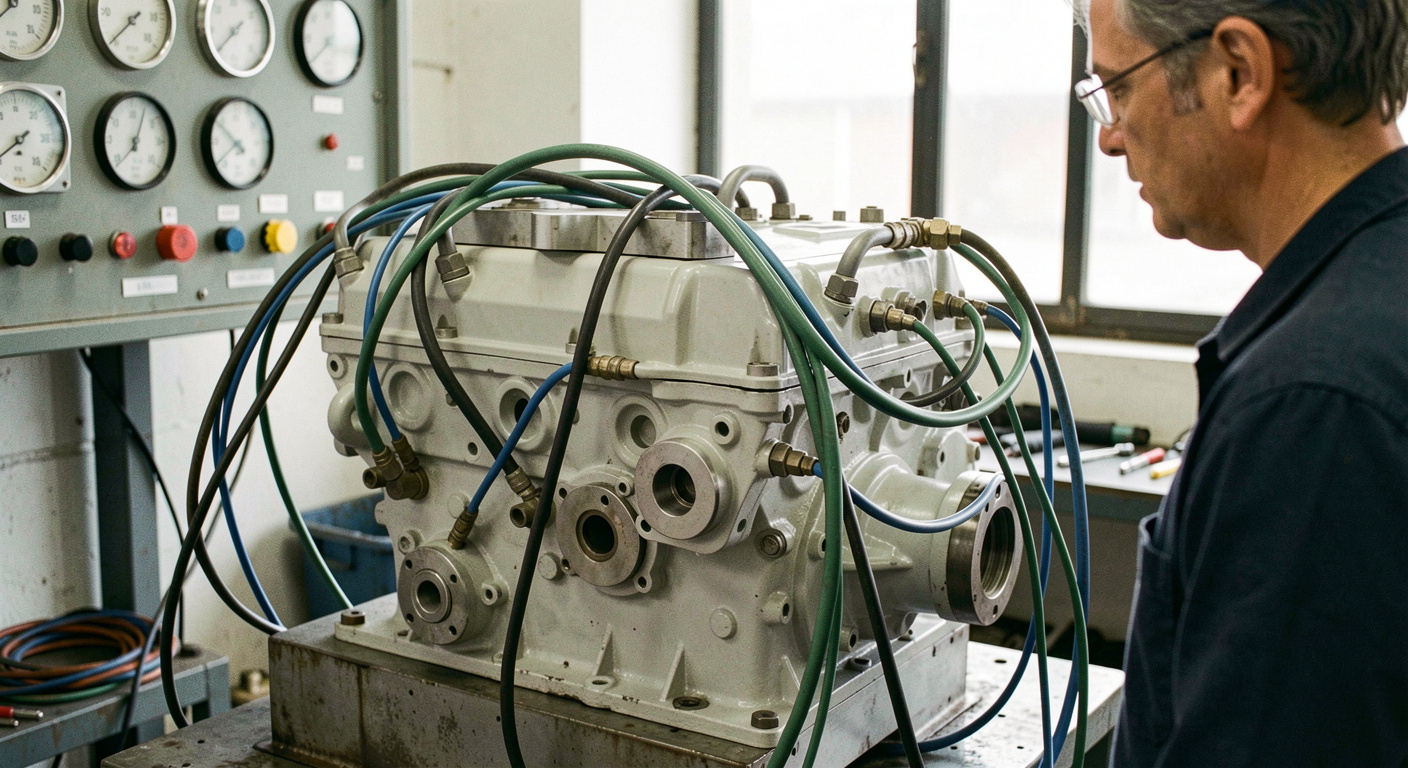
A new or freshly overhauled diesel is not yet the engine it will become. Its piston rings have been machined and fitted, but they have not yet worn themselves to match the exact profile of the cylinder bores they sit in, and until they do, combustion pressure leaks past them into the crankcase and oil finds its way upward into the combustion chamber. The purpose of a break-in period is to complete that matching under controlled conditions.
The figure most often quoted for a generating set is around 60 hours of running before the machine is put onto sustained full load, with the engine manufacturer's own instruction taking precedence. What matters more than the exact number is what happens during those hours.
What is actually happening
A cylinder bore is finished with a crosshatch honing pattern, a controlled set of fine grooves that hold a film of oil and give the rings something to bed against. During running-in, the ring faces and the peaks of that pattern wear together until the ring seals across its whole circumference. Three conditions help it: enough cylinder pressure to push the ring against the wall, enough heat for the assembly to reach its working clearances, and enough oil flow to carry away the wear debris.
All three argue against the instinctive approach, which is to run a new machine gently at light load for a long time. Light load means low cylinder pressure, which means the rings are not pressed against the wall, which means they polish the honing pattern smooth instead of bedding into it. A glazed bore does not recover, and the engine will consume oil for the rest of its life.
| Period | Suggested load | What to watch |
|---|---|---|
| First 1 to 2 h | No load then 25 % | Oil pressure, leaks, unusual noise |
| 2 to 10 h | 25 to 50 % | Coolant temperature stabilising, exhaust colour |
| 10 to 30 h | 50 to 75 % | Oil level, blow-by from the breather |
| 30 to 60 h | 75 % with short periods at full | Temperatures, oil consumption trend |
| At about 50 to 60 h | Stop, first oil and filter change | Debris in the filter, oil condition |
| After 60 h | Full load permitted | Consumption should have settled |
The first oil change is early, and it is not a formality
Running-in produces metal. Fine particles from the ring faces, the bore peaks and the bearing surfaces circulate in the oil and collect in the filter. That is why the first oil and filter change on a new or overhauled engine comes far earlier than the normal service interval, commonly around 50 to 60 hours, and why the used filter is worth cutting open and looking at rather than binning.
What a normal service interval looks like once the engine is bedded in, and why the calendar limit usually governs on standby plant, is covered in the oil change interval guide.
Starting a new set every month for a thirty minute no-load exercise and never loading it does not run the engine in. It does the opposite: it glazes the bores and accumulates unburnt fuel in the exhaust, the process described in the load bank testing guide. A new standby machine needs a real load applied deliberately, early, and in stages.
Blow-by, oil consumption and how to tell it worked
Two indicators tell you whether the rings have bedded. The first is crankcase blow-by, the gas escaping past the rings and out of the breather, which should reduce noticeably over the running-in period. The second is oil consumption, which should fall and then settle at a stable figure. An engine whose consumption is still climbing at 100 hours has a problem that will not fix itself.
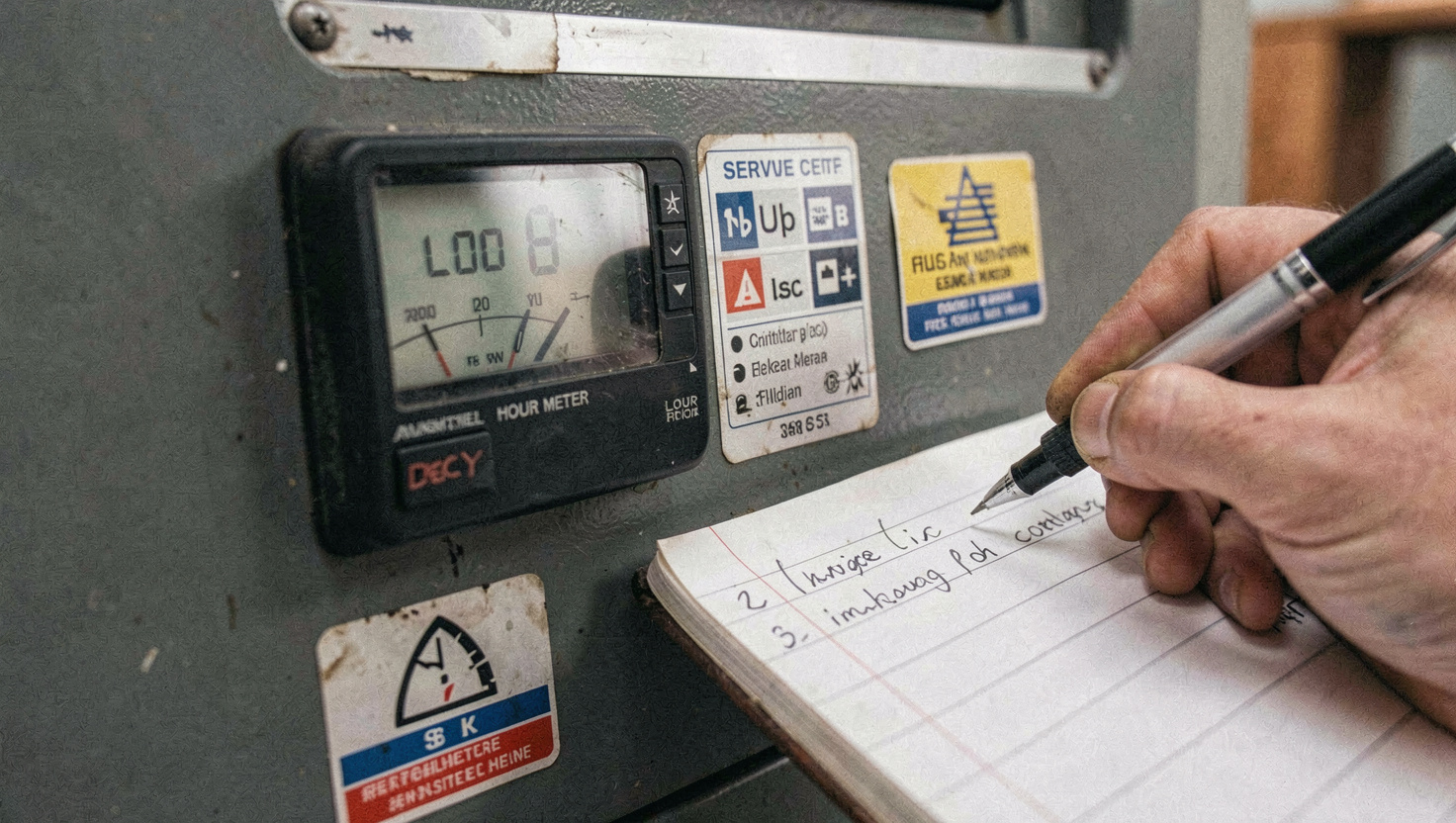
Both indicators need a baseline, which means writing down the oil level and the breather condition at the start rather than trying to remember them later. That is the same discipline that turns a set of service intervals into a maintenance history, and it is why the logbook appears in every guide in this section.
What varies by engine platform
The general principle holds everywhere, but the detail varies. Electronically controlled engines may have a factory break-in map, and some manufacturers specify a particular running-in oil that must be removed at the first change. Others specify standard oil from the first hour and warn explicitly against a friction modifier. Cylinder liner construction and honing specification differ between families as well.
Because of that, the instruction that governs is always the one for the specific engine family. The platform pages give the context, the Cummins page for the B through QSK families and the Perkins page for the 400 through 4000 series, and the manual for the individual engine gives the number.
Where a set is commissioned far from a dealer network, this is the step most often skipped under pressure to get power on. The export-project version of that pressure is described in the international case studies section.
Read next
Once the engine is bedded in, the schedule takes over: the oil change interval guide covers what governs and why the filter changes anyway.
A new standby set still has to be proved under real load. The load bank guide explains how that test is staged and recorded.
For platform-specific running-in instructions, start from the Cummins page or the Perkins page, then read the manual for the individual engine.