Genset Digest / Maintenance & Operation Guides / Oil change intervals
Generator Oil Change Intervals
Hours or calendar, whichever comes first: on standby plant the calendar wins every time, and it wins while the hour meter still reads almost nothing. This guide covers the baseline interval, when a higher grade extends it, and why the filter comes out on its own schedule regardless.
Two numbers govern an oil change on a generating set, and the mistake that costs the most is assuming only one of them exists. The interval is hours of running or a period of calendar time, whichever comes first. On a machine that runs constantly the hour limit arrives first. On a standby machine that runs thirty hours a year, the calendar limit arrives first every single time, and it arrives while the hour meter still reads almost nothing.
The common baseline for a mid-range diesel generating set is 250 running hours or one month, whichever comes first, with the engine manufacturer's published figure taking precedence in every case.
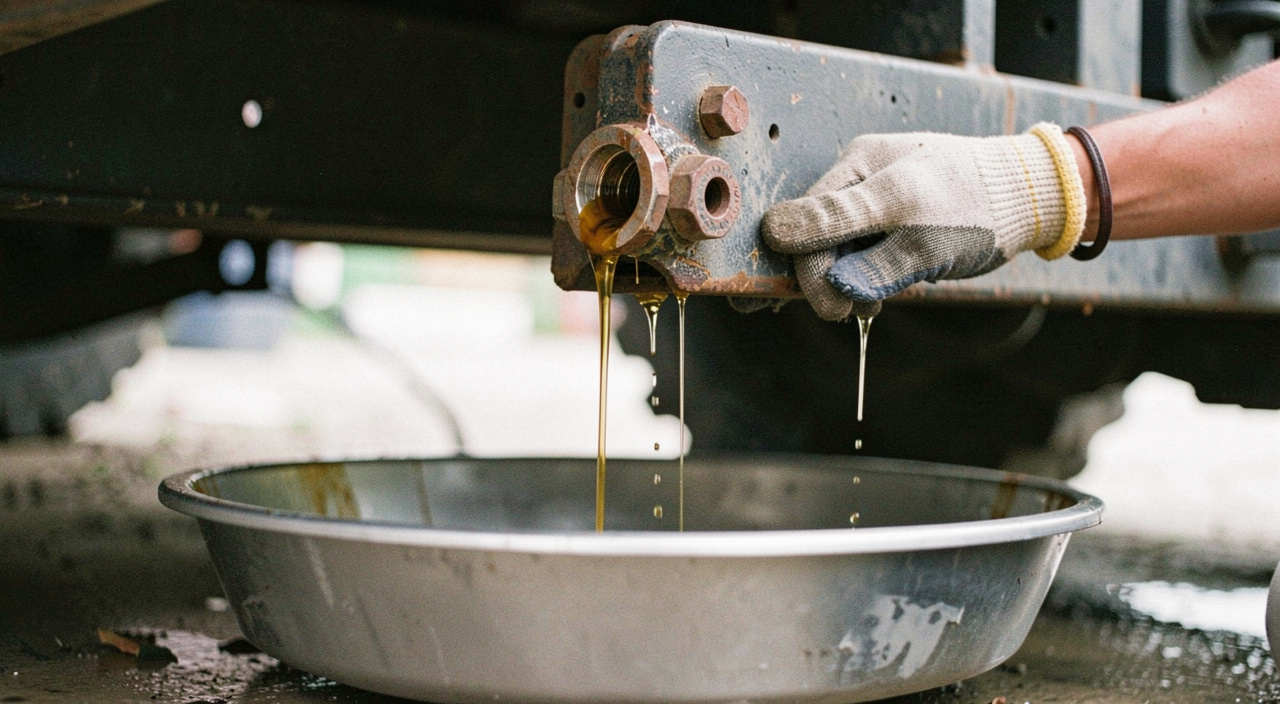
Why the calendar limit exists at all
Oil does not only wear out from work. It oxidises, absorbs water from condensation in the crankcase, and loses its additive package, particularly the alkaline reserve that neutralises the acids formed by combustion. All three of those proceed with time rather than with hours, and a standby engine that runs a short exercise once a month is the worst case: each short run heats the oil enough to promote oxidation and condensation without ever running long enough to boil the water back out.
Short runs also dilute the oil with unburnt fuel, for the reasons set out in the load bank testing and wet stacking guide. Diluted oil has lower viscosity exactly where the bearings need it most, which is why a standby machine's oil condition is often worse than its hour meter suggests.
| Condition | Typical oil interval | Note |
|---|---|---|
| Standard mineral oil, general duty | 250 h or 1 month | Whichever comes first |
| Higher grade oil, clean conditions | Up to 400 h | Only with the engine maker's agreement |
| Dusty or high-ambient site | Shorten from the baseline | Air filter interval shortens too |
| Prime duty, high hours | Hour limit governs | Plan around the running programme |
| Standby duty, low hours | Calendar limit governs | The hour meter will never call it |
| First change after overhaul | 50 to 60 h | Break-in debris in the filter |
Where a higher grade buys you something
Moving to a higher specification oil, with a stronger additive package and better oxidation resistance, can extend the hour interval, commonly toward 400 hours in favourable conditions. Two conditions attach to that. The extension has to be acceptable to the engine manufacturer, because it is their warranty. And the extension applies to the oil, not to everything else.
A full-flow filter has a finite dirt-holding capacity that has nothing to do with the chemistry of the oil in it. Running a 400 hour oil through a filter rated for 250 hours risks the bypass valve opening, at which point unfiltered oil circulates through the engine and the whole point of the exercise is lost. If the oil interval is stretched, the filter still comes out on the original schedule.
Oil analysis, and when it is worth the money
A used oil sample sent for analysis returns viscosity, total base number, water content, fuel dilution and a spectrographic reading of wear metals. On a single small set it is a cost with limited return. On a fleet, or on any machine where an interval extension is being considered, it is the only honest basis for the decision: it turns the question from an opinion into a measurement, and it establishes a trend that shows a developing problem before it becomes a failure.
Iron and chromium point at rings and liners. Copper and lead point at bearings. Silicon points at dirt ingress, which usually means the air filter or the induction pipework rather than the oil. Sodium or potassium with water points at coolant entering the sump, which is a different and more urgent conversation.
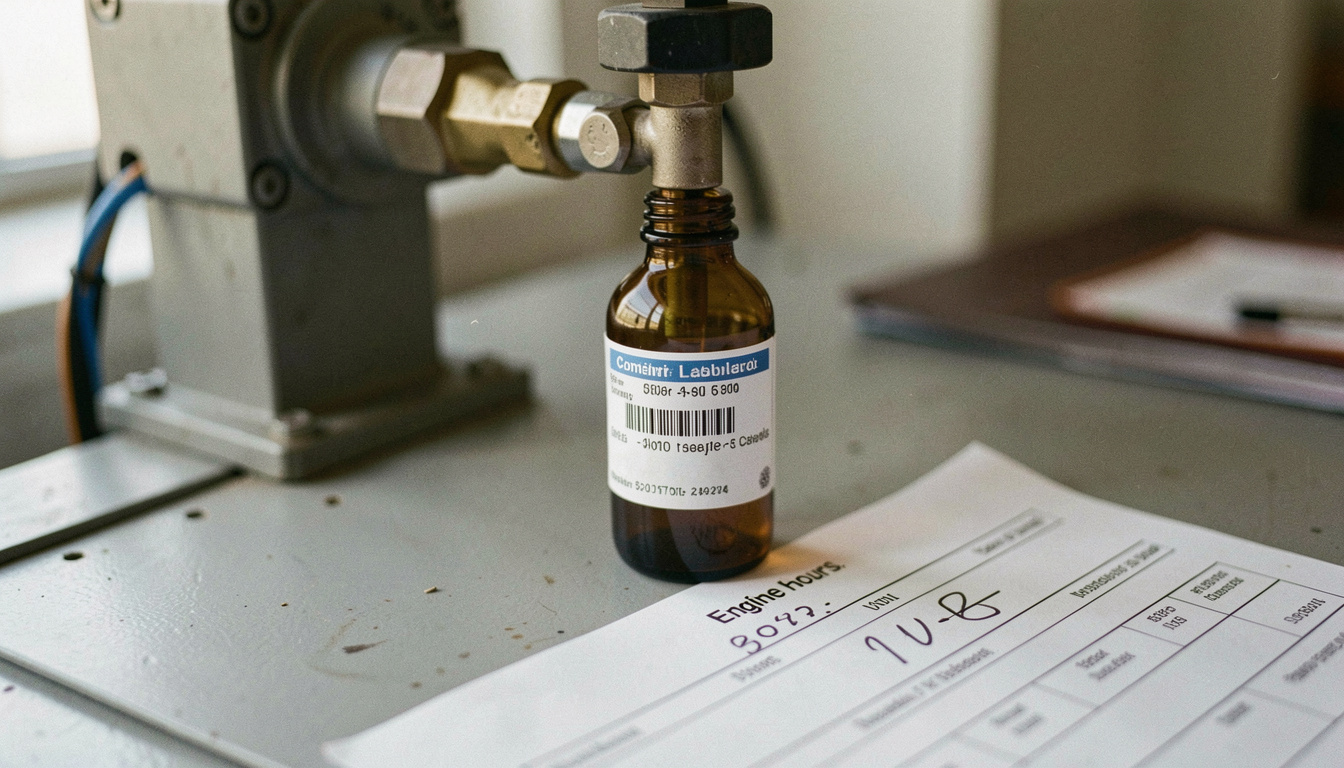
Grade, quantity and the practical routine
Viscosity grade follows the ambient the machine works in, with a multigrade such as 15W-40 the usual choice for temperate installations and thinner cold-start grades where the plant room is genuinely cold. The engine manual states the specification and the sump capacity, and both should be recorded in the logbook so that a top-up is never guesswork.
The routine itself is short: run the engine to working temperature, stop it, drain warm so contamination leaves with the oil, change the filter with a light film of oil on the new seal, refill to the correct quantity, run briefly and re-check the level once the filter has filled. Then write down the date, the hours and the oil used. That last step is the one that turns a service into a record, which is what the standards and documentation page is ultimately about.
On mid-range platforms in particular, this discipline is the largest single lever on running cost over ten years, a point developed in the Weichai platform page. And if the oil has spent a season in an overheating engine, change it regardless of the interval, for the reasons in the overheating guide.
Read next
A hot season shortens every interval on this page: the overheating guide covers what heat does to the additive package and how to find the cause.
If the oil is diluting with fuel on a low-hour machine, the cause is usually the duty cycle: read load bank testing and wet stacking.
For the first change after a rebuild, and why it comes so early, see the break-in period guide, with the rest of the schedule in the maintenance section.