Genset Digest / Industry News / Standby power in construction
Standby Power Demand in Construction
Standby power used to be a late item on a construction project, retrofitted into whatever space was left. That order is changing, and the reasons are practical: grid connection timescales, tenant requirements, and the visible cost of every constraint decided late.
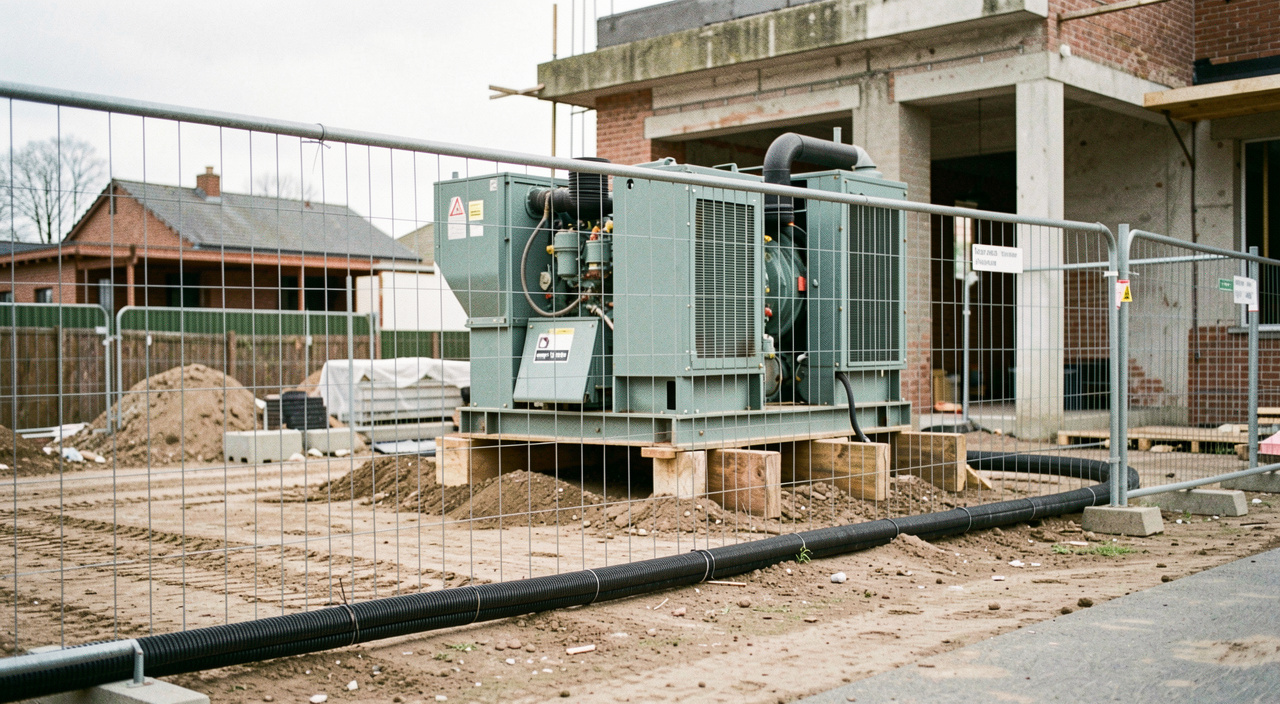
For a long time the standby generator was a late item on a construction project. The building was designed, the electrical intake was agreed, and somewhere near practical completion somebody asked what happens when the supply fails. The answer was retrofitted into whatever space remained, which was usually the worst space in the building.
That order has been changing. Standby power is increasingly specified at design stage, and the reasons are practical rather than fashionable.
Why the decision has moved earlier
Three pressures push it forward. Grid connection timescales have become a programme risk on many projects, which makes on-site generation part of the delivery plan rather than a contingency. Tenant requirements in commercial buildings increasingly specify a defined standby capability, so it appears in the brief rather than in a variation. And the cost of retrofitting a plant room is high enough, once ventilation, exhaust routing, fuel storage and cable routes are counted, that specifying late is visibly more expensive than specifying early.
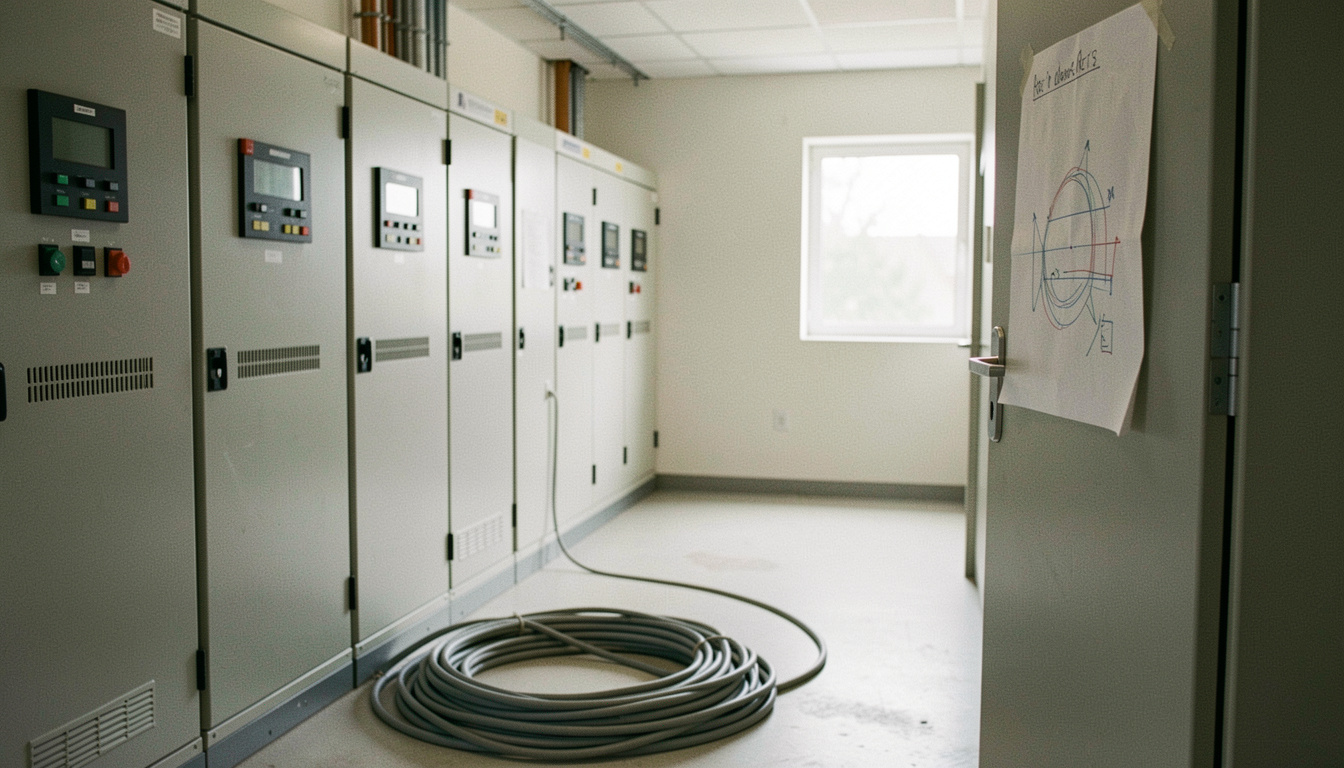
The technical argument is stronger still. Every constraint that decides whether a standby installation works, ventilation openings, exhaust route and back pressure, fuel storage location, foundation loading, acoustic treatment at the boundary, is a building decision. Made early, they are cheap. Made late, they are compromises, and each compromise takes a slice off the machine's usable output. The constraint list is set out in the case studies section.
| Decision | Cost if made at design stage | Cost if retrofitted |
|---|---|---|
| Plant room location and size | Layout adjustment | Loss of lettable area |
| Ventilation openings | Facade detail | Structural opening and acoustic treatment |
| Exhaust route | Riser allocated | Long route, extra bends, back pressure limits |
| Fuel storage and fill point | Bund designed in | Access and bunding retrofitted |
| Cable route to switchgear | Trench or riser allocated | Long runs and volt drop |
| Acoustic treatment | Selected with the facade | Attenuators added after complaint |
Site power and building power are different briefs
A confusion worth naming: the generator that powers a construction site is not the generator the finished building needs. Site power is a prime duty, running most of the working day at a variable and often low load, with tower cranes and welding sets producing sharp transients. Building standby is an emergency duty, standing idle for months and then required to carry a defined load within seconds.
The same machine can be asked to do both, and frequently is, but the ratings are different and the wear history is different. A set that spent eighteen months as site power and is then left in the basement as the building's standby machine has already used a meaningful part of its life, and it has probably spent much of it at low load, with the consequences described in the load bank testing and wet stacking guide.
State the expected annual running hours and the load profile in the enquiry. On a construction project that single line decides whether the machine is bought as prime or as standby plant, and therefore whether it is the right size, the right rating class and the right price.
Turning the brief into a number
The specification question that follows is straightforward but rarely done properly: translating a project brief into a kVA figure. It needs a load list with running kilowatts and power factors, a decision about which loads are on the essential supply, an identification of the largest motor and its starting method, and the derating corrections for the ambient the plant room will actually reach.
That method, with a worked example, is set out in sizing a generator set for your load. It is worth doing before a supplier is asked for a price, because a specification that states its own kVA requirement with the duty class attached produces comparable quotations, and one that does not, does not.
What to watch next
Two developments are worth following from a specification point of view. Hybrid arrangements that pair a battery system with a diesel set change the duty profile toward fewer, longer runs, which is better for the engine and harder on the assumption that the machine is exercised often. And the continued separation of emission rules by application category makes the intended use of the machine part of the purchase decision.
Both are tracked in the industry news section, with the export-market version in international news and the underlying duty class vocabulary in the generator set section.
Read next
The next step from a brief is a number: the sizing method works a load list through to a kVA figure with the starting margin and derating included.
For the building constraints that decide whether the installation works, read the installation profiles.
For the wider trend coverage, see the industry news hub, and for the duty classes behind all of it, the generator set section.